
What is a verb in French?
A word in French, which is used to define an action, a condition or an experience, is called a verb. It logically tells us what an individual or a thing does and how or what it feels or experiences. Verbs in French give sentences their life and occasionally dictate how other words are arranged.
In French, verbs can describe actions or states:
- Action verbs show something a subject does: Le chat dort sur le canapé (The cat sleeps on the sofa), dort is the verb used to explain the action.
- Stative verbs describe a state, emotion, or condition rather than a physical action: In Elle semble heureuse (She seems happy), semble does not refer to any physical action; it is a state.
There are 3 major groupings of verbs in accordance with their infinitive endings: -er, -ir and -re. The majority of -er verbs like chanter (to sing) can be predicted, whereas irregular verbs such as aller (to go) or prendre (to take) need some special considerations.
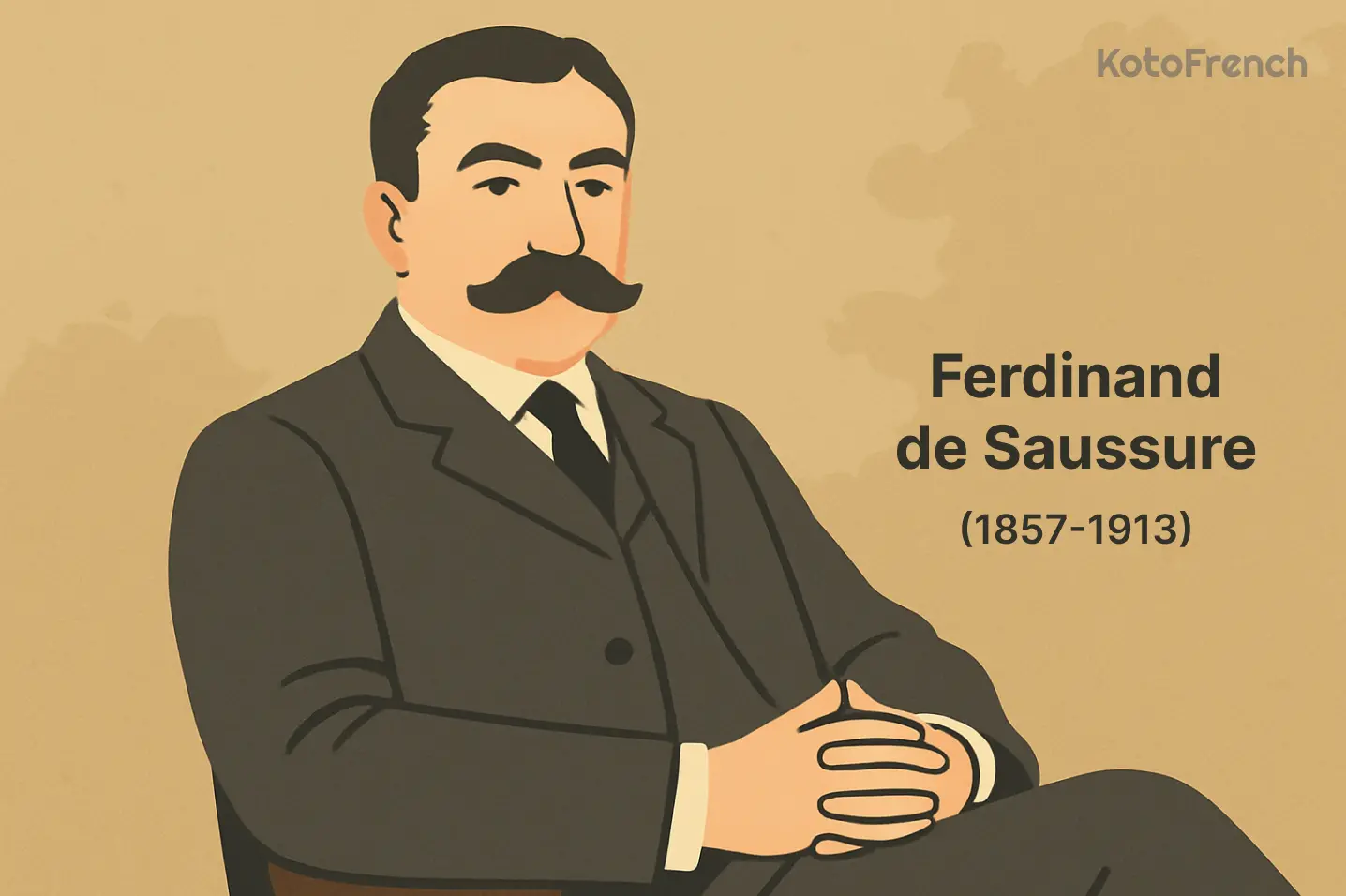
Ferdinand de Saussure, a Swiss linguist famous since the early 20th century, highlighted the importance of understanding structural relationships between words. Applying this insight to French verbs, recognizing patterns and exceptions, helps learners express thoughts, emotions, and daily actions accurately.

We will talk about that further in our article and you will ensure that knowledge of these forms allows showing thoughts, feelings, and everyday behavior in French naturally.
Level up your English with Koto!
Types of French verbs
The knowledge of the types of verbs in French enables learners to speak and write clearly. By determining the different kinds of verbs, it becomes easy to learn the rules and exceptions.
Regular
Unique conjugations in regular verbs are predictable and therefore simple to learn. They are classified into three broad categories according to their infinitive endings, which are -er, -ir and -re. Examples include:
With these French verbs, you can build tenses and moods without any doubt and when you know the pattern of each group, you know the verbs upon which the conversation of everyday French takes its base.
Irregular
Exceptional verbs have no regular conjugation principles; thus, they have to be frequently studied separately.
Incidentally, it is noted that the majority of the French-speaking children do not find any difficulty with conjugating the regular forms of verbs until the age of 6, but mastering irregular ones may take into adolescence. The typical verbs of this category are:
Used in both speech and writing, irregular verbs often determine success in communication.
Reflexive
Reflexive verbs are those in which the subject acts on itself and this is recorded by the word se (or s before a vowel). Instances are as follows:
These verbs are used in normal activities and can be employed in any usual talk.
Modal
Modal verbs: pouvoir (can), vouloir (want) and devoir (must/should) are used together with the infinitive to describe possibility, wish or duty.
Proper use of modal verbs helps express intentions, permissions and necessities in clear terms.
There are numerous ways of using French verbs to demonstrate actions, states, abilities or reflexive behaviors, and learning them assists in communicating more accurately and confidently in both speech and writing.
Conjugations of verbs in French
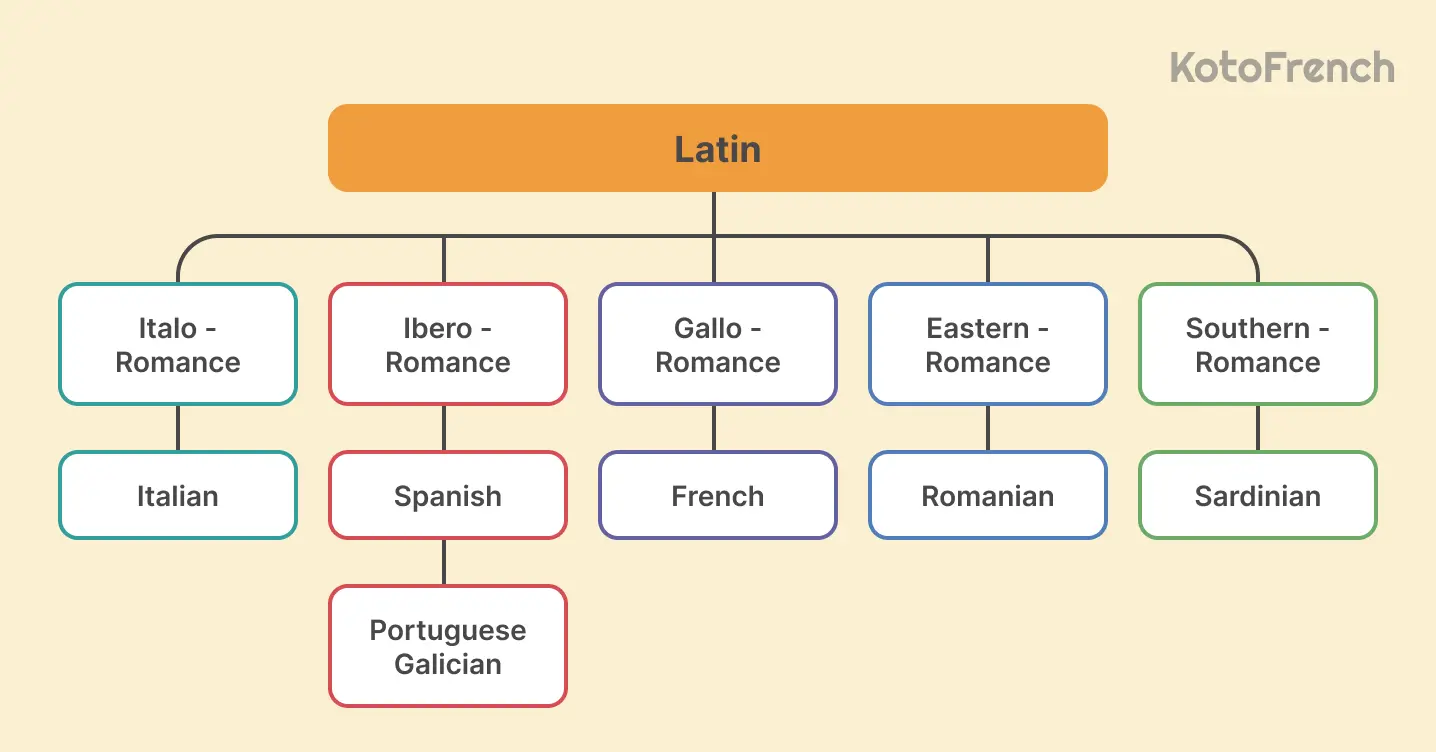
In French, like in Spanish, Italian, Romanian and Portuguese (Romance language family), conjugation refers to the process of altering the form of the verb according to the subject, tense, and mood.
Methodology is used to determine who is carrying out the activity and when. Let us consider the role of common verbs in French in the present, past and future tense.
Present tense
The present tense is applied in cases of something that is occurring or is being done habitually. Routine form verbs, such as aimer (to love), have predictable endings:
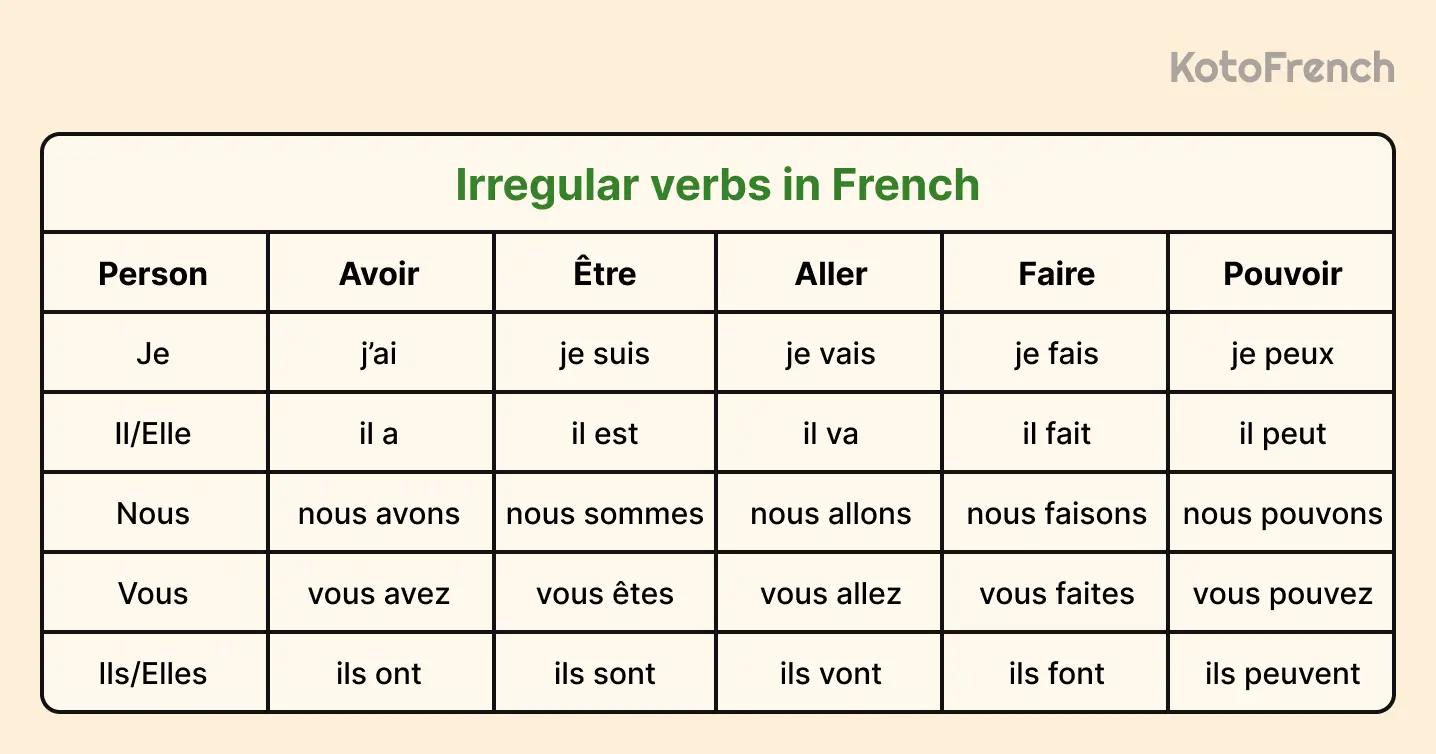
As we said before, certain verbs cannot be standard and have to be learned by heart, such as Être (to be):
A table containing the most popular irregular list of verbs in French that you are expected to remember to make it comfortable is given here.
Past tense
French uses various past tenses, although passé composé is the most used in day-to-day activities. It combines an auxiliary verb (avoir or être) with a past participle.
Passé composé is used in the narration of things that are done, things that have already taken place or a series of things that have been done previously. It usually comes with such phrases as hier (yesterday), la semaine dernière (last week), or ce matin (this morning).
As in many other rules, there are unique past participles used by certain irregular verbs, so they must be studied separately. Here is a special-case verbs in French list:
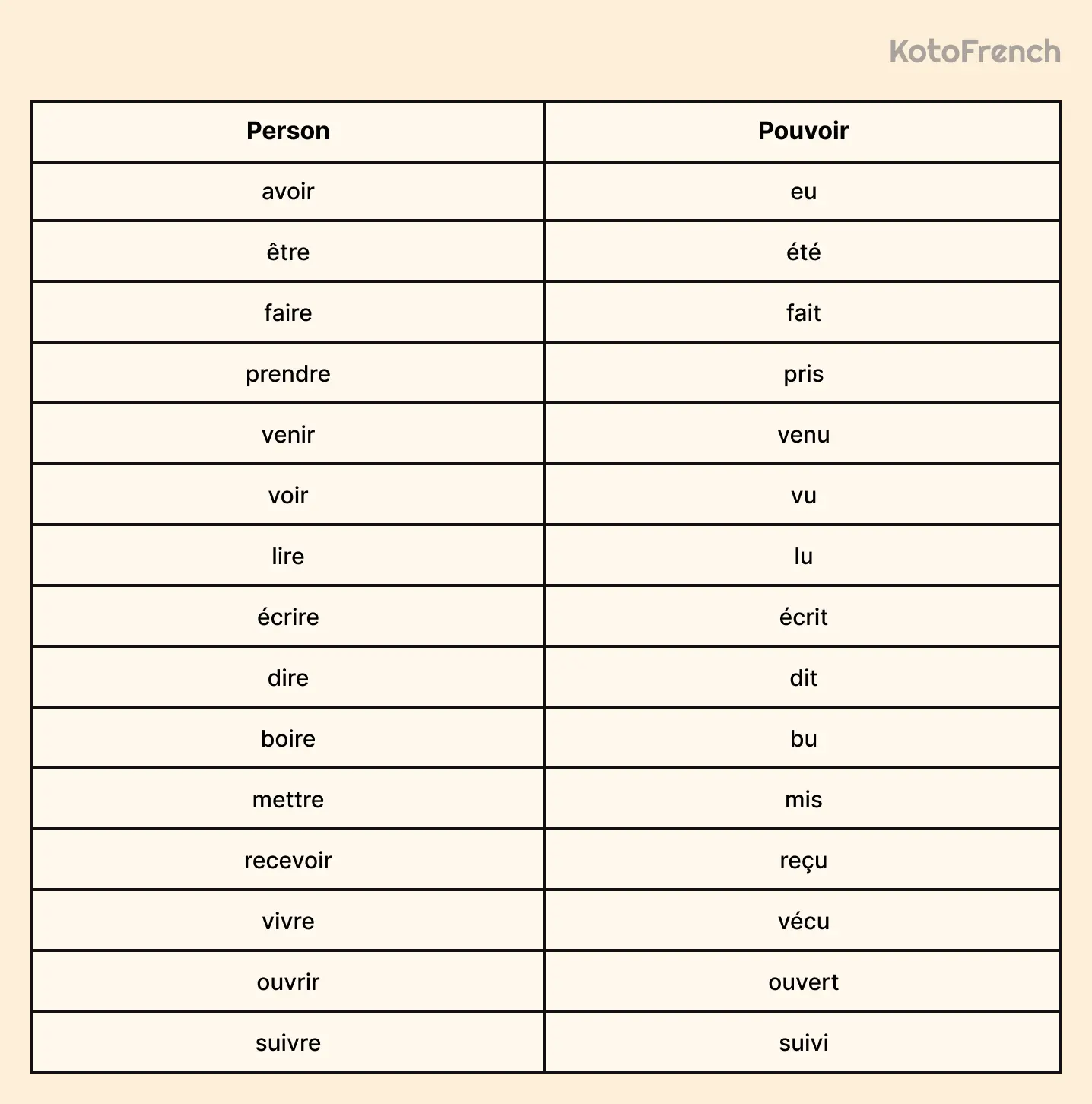
The passé composé will prepare students to tell about the past, recount their own experiences and tell stories clearly.
Future Tense
The future tense depicts the actions or events that are bound to happen. It is made by regular verbs, and consists of the infinitive with endings added to it, in the same manner as avoir.
|
Person |
Ending |
|---|---|
|
je |
-ai |
|
tu |
-as |
|
il / elle / on |
-a |
|
nous |
-ons |
|
vous |
-ez |
|
ils / elles |
-ont |
Irregular verbs use unique stems but the same endings, so learners need to memorize these stems while applying the standard endings:
The future tense is defined as having the subject and the time when something takes place and therefore, proper use of conjugation is crucial. Slow French verb practice will help you to talk about upcoming events, promises and plans easily.
French verb tenses and their usage
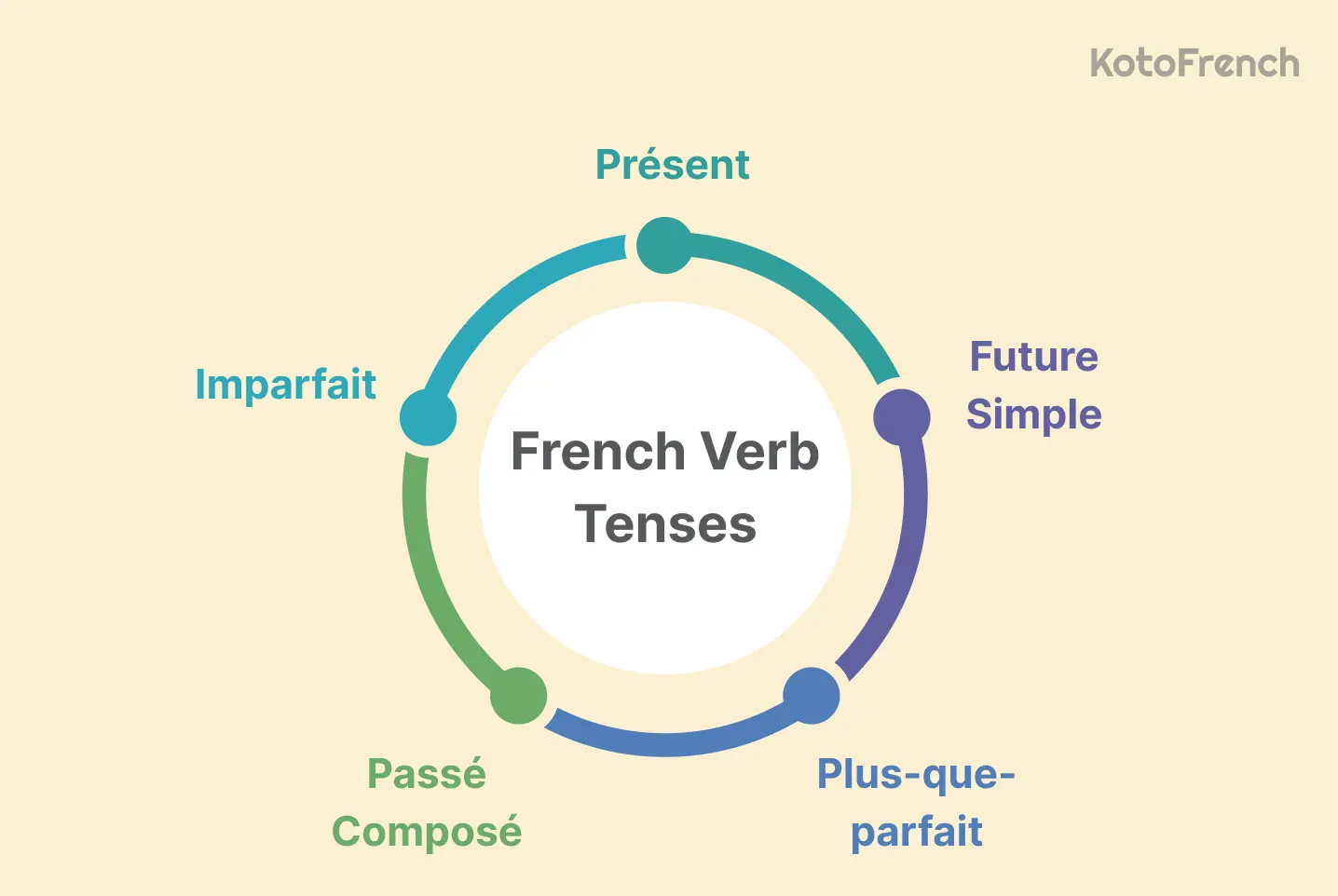
In French, verb tenses are divided into simple and compound tenses, and they mark the time of action, as well as the nature of an action. The Présent, Imparfait, Futur Simple, Passé Composé and Plus-que-parfait are most commonly used by beginners.
Présent (Present Tense)
The présent describes actions happening now or habits. Regular -er verbs like aimer follow predictable endings:
|
Person |
Verb: danser (to dance) |
Verb: rêver (to dream) |
Verb: dessiner (to draw) |
|---|---|---|---|
|
Je |
Je
|
Je
|
Je
|
|
Tu |
Tu
|
Tu
|
Tu
|
|
Il/Elle |
Elle
|
Il
|
Elle
|
|
Nous |
Nous
|
Nous
|
Nous
|
|
Vous |
Vous
|
Vous
|
Vous
|
|
Ils/Elles |
Ils
|
Elles
|
Ils
|
The irregular verbs do not follow the regular rules of regular conjugations and they must be studied independently.
|
Person |
Verb: boire (to drink) |
Verb: lire (to read) |
Verb: sortir (to go out) |
|---|---|---|---|
|
Je |
Je
|
Je
|
Je
|
|
Tu |
Tu
|
Tu
|
Tu
|
|
Il/Elle |
Il
|
Elle
|
Elle
|
|
Nous |
Nous
|
Nous
|
Nous
|
|
Vous |
Vous
|
Vous
|
Vous
|
|
Ils/Elles |
Ils
|
Elles
|
Ils
|
Imparfait (Imperfect tense)
The imparfait is used to describe the background or constant or repeated actions in the past.
|
Person |
Verb: jouer (to play) |
Verb: regarder (to watch) |
Verb: marcher (to walk) |
|---|---|---|---|
|
Je |
Je
|
Je
|
Je
|
|
Tu |
Tu
|
Tu
|
Tu
|
|
Il/Elle |
Il
|
Elle
|
Elle
|
|
Nous |
Nous
|
Nous
|
Nous
|
|
Vous |
Vous
|
Vous
|
Vous
|
|
Ils/Elles |
Ils
|
Elles
|
Ils
|
Futur Simple (Simple Future)
The futur simple, which is also called futur simple passif, is used to discuss the future and has certain endings of the infinitive with regular verbs: -ai, -as, -a, -ons, -ez, -ont.
|
Person |
Explorer (to explore) |
Chanter (to sing) |
Organiser (to organize) |
|---|---|---|---|
|
Je |
Je
|
Je
|
J’
|
|
Tu |
Tu
|
Tu
|
Tu
|
|
Il/Elle |
Il
|
Elle
|
Il
|
|
Nous |
Nous
|
Nous
|
Nous
|
|
Vous |
Vous
|
Vous
|
Vous
|
|
Ils/Elles |
Ils
|
Elles
|
Elles
|
Passé Composé (Compound Past)
The passé composé expresses completed past actions. It consists of an auxiliary verb (avoir or être) and a past participle:
|
Person |
Verb: regarder (to watch) |
Verb: venir (to come) |
Verb: inventer (to invent) |
|---|---|---|---|
|
Je |
J’
|
Je
|
J’
|
|
Tu |
Tu
|
Tu
|
Tu
|
|
Il/Elle |
Il
|
Elle
|
Elle
|
|
Nous |
Nous
|
Nous
|
Nous
|
|
Vous |
Vous
|
Vous
|
Vous
|
|
Ils/Elles |
Ils
|
Elles
|
Elles
|
Plus-que-parfait (Pluperfect)
The plus-que-parfait refers to the actions fulfilled prior to something happening in the past, which is constructed with the help of the Imperfect tense of avoir or be plus a past participle.
|
Person |
Verb: nager (to swim) |
Verb: partir (to leave) |
Verb: observer (to observe) |
|---|---|---|---|
|
Je |
J’
|
J’
|
J’
|
|
Tu |
Tu
|
Tu
|
Tu
|
|
Il/Elle |
Il
|
Elle
|
Elle
|
|
Nous |
Nous
|
Nous
|
Nous
|
|
Vous |
Vous
|
Vous
|
Vous
|
|
Ils/Elles |
Ils
|
Elles
|
Elles
|
Typical spelling variations
There are verbs in French that are spelled differently in order to remember the sound or to observe regular patterns in particular forms. These rules are being recognized to enhance accuracy and clarity in the French expression.
Soft c and g changes
Spelling adjustments occur in -cer and -ger verbs to keep the soft c or g sound when followed by a or o.
|
Verb |
Change |
Example |
|---|---|---|
|
commencer |
c – ç |
nous commençons |
|
lancer |
c – ç |
nous lançons |
|
manger |
add e |
nous mangeons |
|
partager |
add e |
nous partageons |
Vowel changes
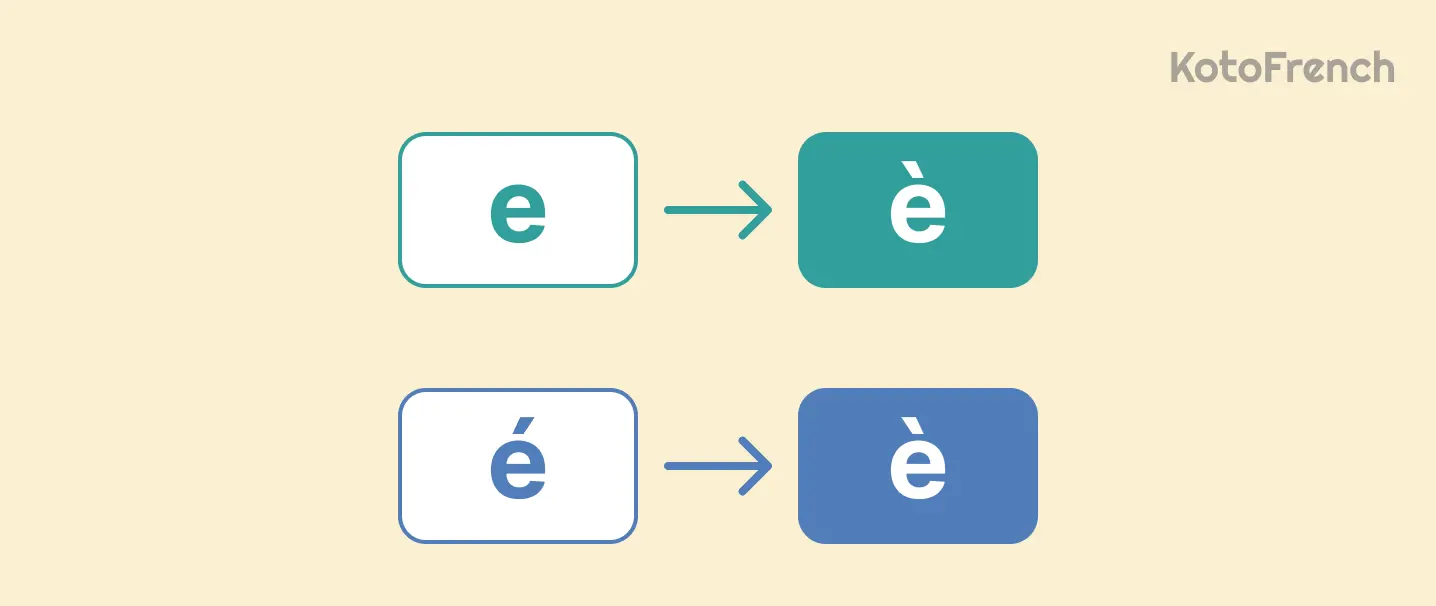
Some verbs will modify a stem vowel in one form in order to maintain proper pronunciation or stress, e.g. e – è or é – è.
|
Verb |
Change |
Example |
|---|---|---|
|
acheter |
e – è |
j’achète |
|
lever |
e – è |
tu lèves |
|
préférer |
é – è |
il préfère |
|
espérer |
é – è |
nous espérons |
Doubling consonants
The French language has a set of verbs that will see doubling of consonants in the stem when applied to certain tenses and this alteration will be guaranteed and bring the right and correct pronunciation.
|
Verb |
Change |
Example |
|---|---|---|
|
appeler |
l → ll |
j’appelle |
|
jeter |
t → tt |
tu jettes |
|
rappeler |
l → ll |
il rappelle |
|
projeter |
t → tt |
je projette |
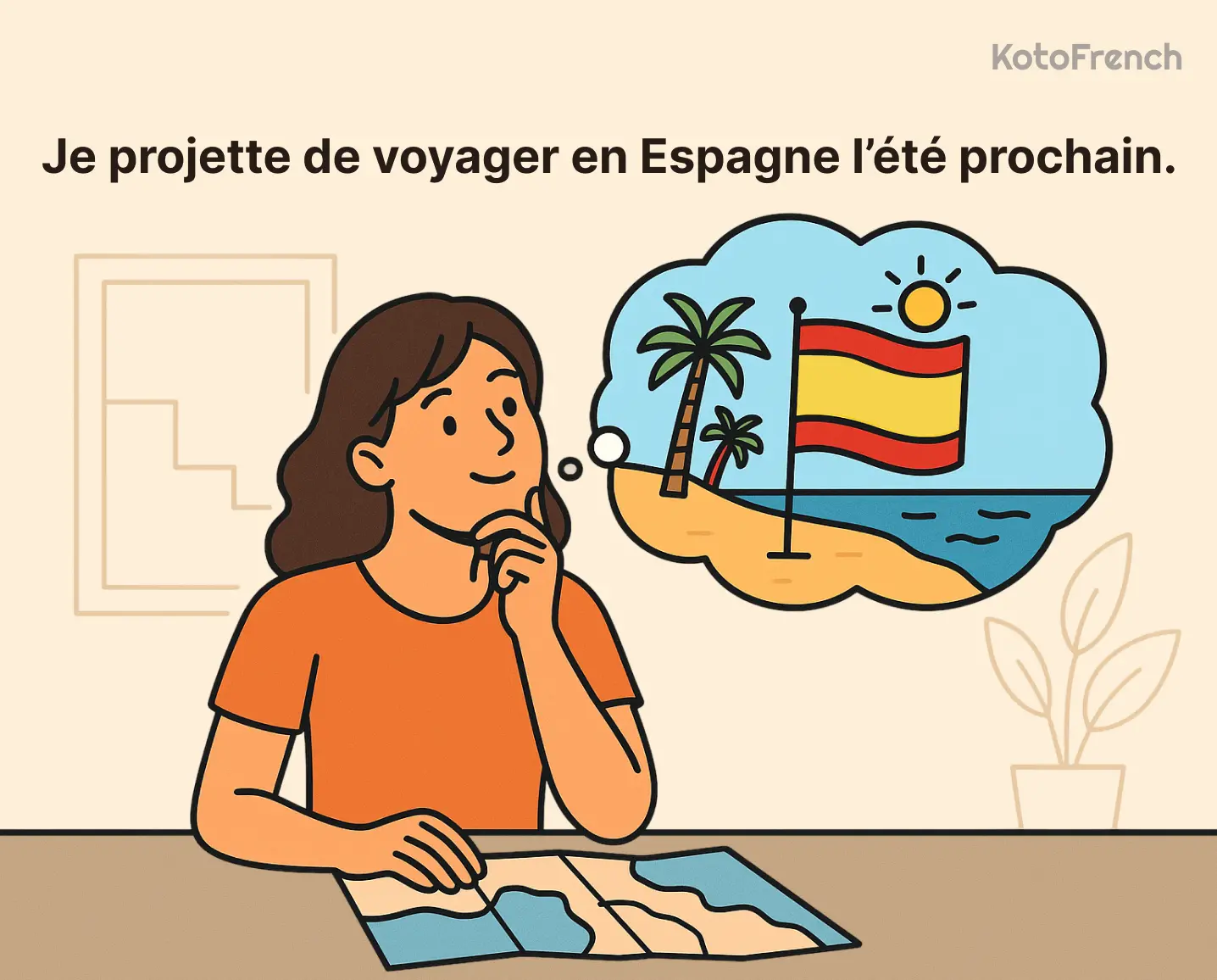
What looks like irregularity is often a consistent rule in disguise. Paying attention to these variations in a certain list of French verbs makes conjugation intuitive and communication effortless.
Common mistakes to avoid
Common errors can slow down progress in French, but knowing them in advance makes them easier to avoid. We dedicated this chapter to reviewing mistakes that frequently appear in verbal, written and reading practice.
-
Forgetting agreement in compound tenses
One of the most frequent mistakes is forgetting to make the past participle agree in gender and number with the subject when using être.
Elle est tombé dans le parc.Elle est tombée dans le parc.Ils sont parti tôt.Ils sont partis tôt. -
Confusing auxiliary verbs in passé composé
Choosing the wrong auxiliary can make sentences incorrect. Verbs that move or change state tend to use être, whereas the majority of others use avoir.
J’ai tombé dans la rue.Je suis tombé dans la rue.Tu as allé au cinéma.Tu es allé au cinéma. -
Incorrect verb endings
Errors tend to occur when the endings of verbs and subjects do not match, depending on whether they are incorrect or correct.
Tu boit du café.Tu bois du café.Vous regardes la télévision.Vous regardez la télévision. -
Ignoring context and tense consistency
Sometimes students apply the correct form in isolation, yet they do not associate the tense or mood with the context of the sentence.
Je vais au marché hier.Je suis allé au marché hier.Tu fini ton travail.Tu as fini ton travail.
Even advanced students make mistakes; hence, practice, reading and self-correction are the keys to achieving confidence in using verbs in the correct form.
Enjoy personalized learning!
Practice exercises
Want to avoid the usual pitfalls? Work through these exercises on the usage of basic French verb that spotlight conjugation, tense control and auxiliaries in action.
Tips for learning
Studying French verbs involves both memorization and application. Their experience in use, regardless of the past, the present, or the future, creates the long-term knowledge of conjunction patterns and the selection of auxiliaries.
- Flashcards for verb forms
Flashcards turn abstract conjugation rules into clear visual cues. One side has the infinitive, the other displays forms in several tenses and with different subjects. With the verb dormir, you can practice je dors, tu dors, il dort, while irregular verbs such as devoir or voir illustrate unique patterns.
- Speaking exercises
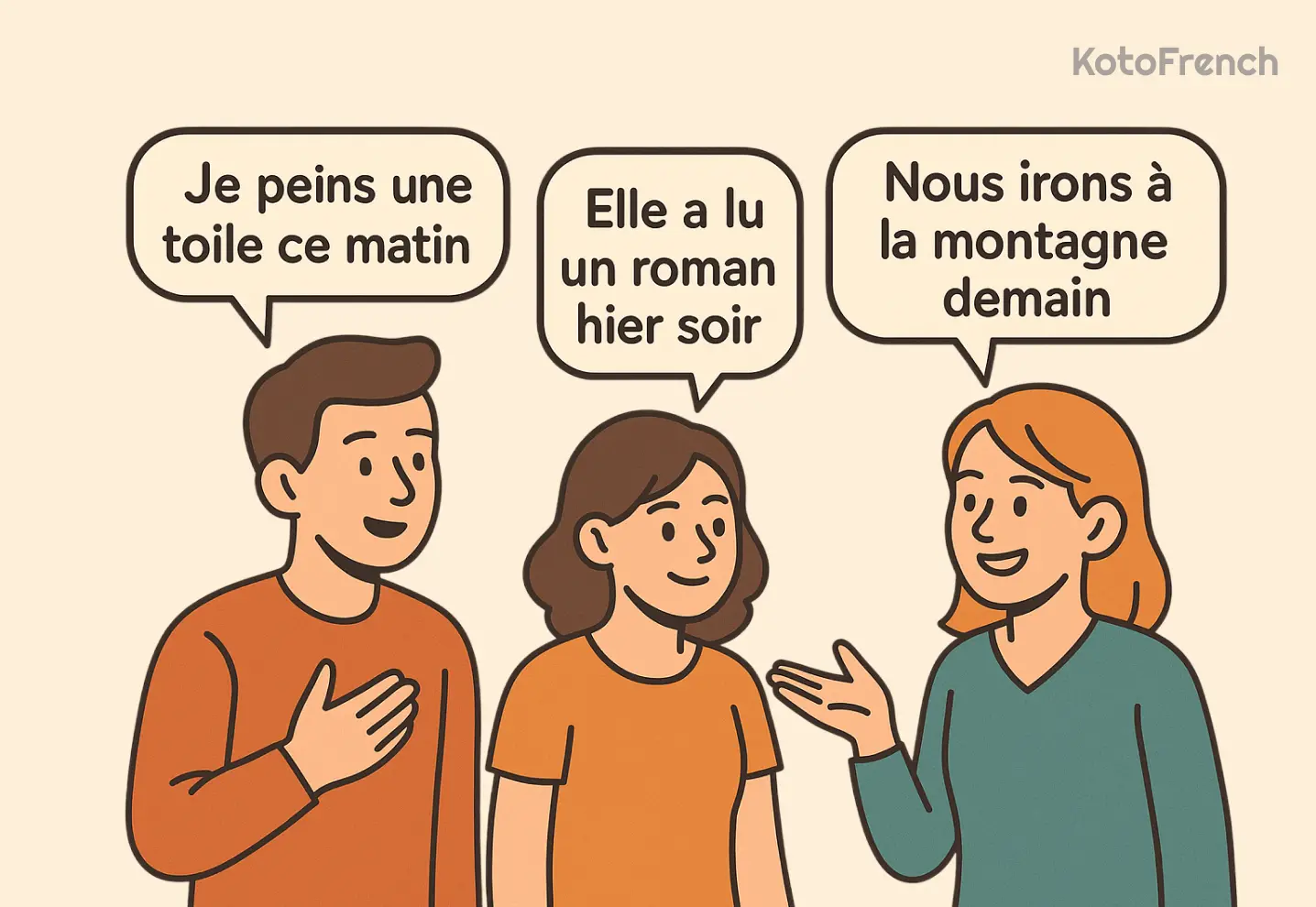
Reading aloud a French verbs list assists in entrenching patterns of conjugation and improper use of tenses. Discuss share plans, future plans, or stories: Je peins une toile ce matin, Elle a lu un roman passionnant hier soir, Nous irons à la montagne demain.
- Writing short sentences
Writing short sentences makes the verbs occur in the context of significance. Write about something you have done, a hobby or something that happened. Hier, elle a préparé un grand repas pour ses amis. As we said before, pay attention to correct tense, subject-verb agreement, and proper use of auxiliary verbs to strengthen understanding and confidence in writing.
- Combine techniques
Try using a mix of approaches to make French verbs stick. Write a short paragraph with the verbs you’ve been practicing, read it aloud as if telling a friend about your day, and check for any mistakes. Switching between writing, speaking, and looking at your flashcards helps you feel the verbs naturally and remember them more easily.
- French as part of your routine
Turn everyday moments into French practice. Chat about errands, your hobbies, or stories from your day in French. Even thinking in French while organizing your tasks helps internalize verbs. Frequent exposure helps verb forms become intuitive and tenses easier to pick.
Conclusion
So what are verbs in French? This part of speech opens doors to expressing thoughts, feelings and experiences with precision. Once you know how verbs work, you are able to tell a story, give instructions or express opinions in a manner that becomes alive and interesting. Even more basic sentences become dynamic when the use of verbs is selected and used correctly.
Consistent practice and curiosity make a big difference. The effects of verbs can be seen in talking to friends, writing notes or reading texts in French. Never give up trying, making mistakes and learning, and before long, verbs will come naturally, and it will be easy to express oneself confidently, fluently, and naturally in the French language.
FAQ about verb in French
Some of the basic French verbs that learners must learn are:
Found in daily conversation as well as reading and writing, an early study of them provides a strong base.
Verbs that are commonly encountered are also conjugated in predictable ways (typically, with an infinitive ending -er, -ir, -re). The irregular verbs do not adhere to these patterns, and they usually alter the stems or French verb endings in unanticipated ways.
Learners are recommended to pay attention to irregular verbs individually because they are frequently used in everyday life.
Reflexive verbs depict that the subject is carrying out an activity on itself. They always contain reflexive pronouns like se, me, or te. For instance, se laver means to wash oneself. When conjugation is involved, the verb has to be adjusted to the subject but the reflexive pronoun is to be retained.
A mix of methods works best. Patterns memorization using flash cards, speaking out loud, writing short sentences and using verbs in actual life all aid in reinforcing the learning process. Frequent contextual practice makes conjugations feel natural and supports accurate verb usage.